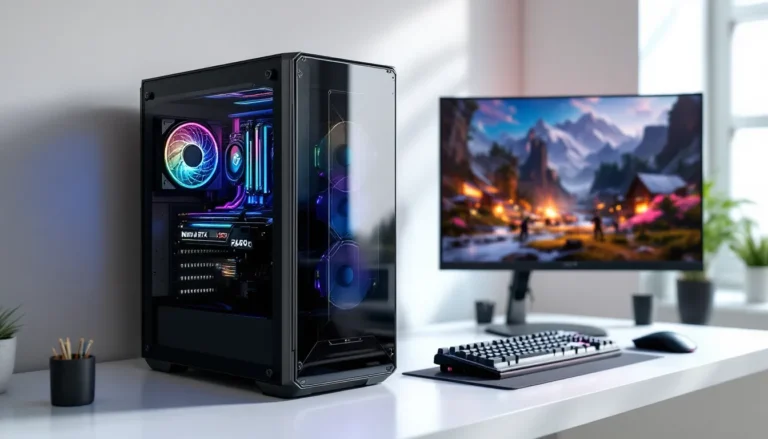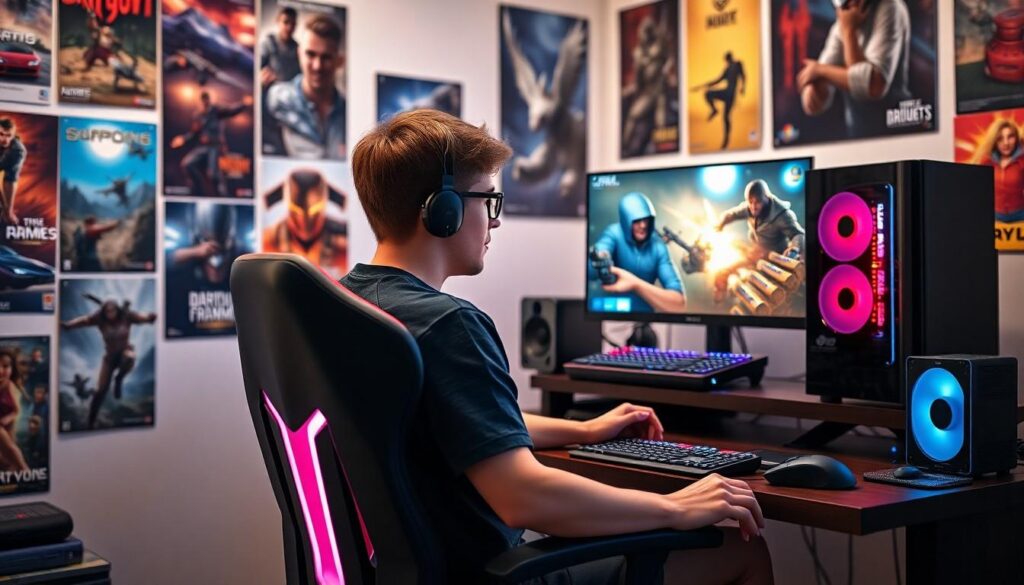
In a world where gaming rigs often resemble small spacecraft, the micro ATX gaming PC swoops in like a superhero in a compact disguise. These pint-sized powerhouses pack a serious punch, proving that size doesn’t always matter. With the ability to deliver stellar performance without taking over an entire desk, they’re the perfect solution for gamers who want to keep their space tidy and their gameplay epic.
What Is A Micro ATX Gaming PC?
Micro ATX gaming PCs blend compact design with robust performance. These systems cater to gamers who prioritize space efficiency without sacrificing power.
Overview of Micro ATX Form Factor
Micro ATX stands as a motherboard size measuring 9.6 x 9.6 inches. This format allows for more expansion slots than Mini ITX while remaining smaller than standard ATX boards. Compact cases support this form factor, which typically accommodates up to four RAM slots and multiple PCIe slots. Many setups utilize Micro ATX due to their versatility, striking a balance between size and functionality. Gamers appreciate the ability to customize their rigs while fitting them neatly on desks.
Advantages of Micro ATX for Gaming
Micro ATX gaming PCs offer several advantages. Space efficiency ranks high, making them great for smaller setups. They provide ample performance, allowing users to run demanding games smoothly. Upgrade paths remain open, with the ability to add components without major overhauls. Cost-effectiveness stands out, as these systems often come at lower prices compared to larger counterparts. Flexibility in design accommodates various cooling solutions, enhancing thermal management. Overall, Micro ATX systems meet the needs of diverse gamers.
Key Components of a Micro ATX Gaming PC
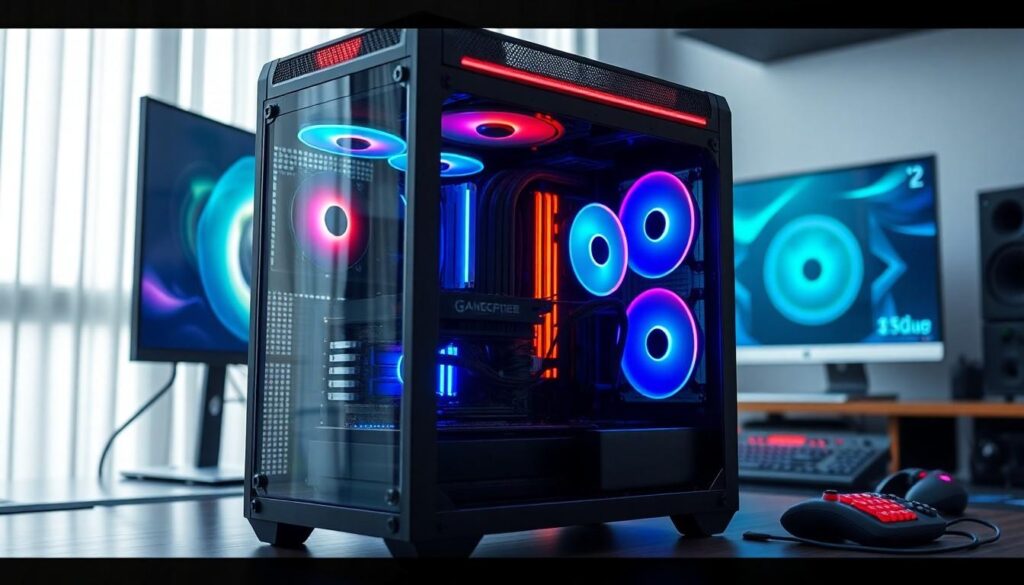
Key components in a micro ATX gaming PC significantly impact performance, customization, and gaming experience. Each component plays a crucial role in creating a well-rounded system.
Choosing the Right CPU
Selecting a suitable CPU is vital for overall performance. Modern gaming typically requires at least a quad-core processor for optimal experience. Popular options include Intel’s Core i5 and AMD’s Ryzen 5 series. Both families offer robust performance across various gaming titles. Clock speed and core count directly influence processing power, affecting frame rates and load times. While multitasking, a more powerful CPU enhances performance during resource-intensive tasks.
Selecting the Appropriate GPU
A high-quality GPU drives gaming visuals and frame rates. Graphic cards from NVIDIA and AMD dominate the market, with models like the NVIDIA GeForce RTX 3060 and AMD Radeon RX 6700 XT delivering excellent performance. When choosing a GPU, focus on VRAM and clock speed to ensure smooth gameplay. Compatibility with the CPU and power supply unit matters as well, affecting overall system performance. Sustaining high frame rates at desired resolutions enhances the gaming experience particularly in graphically demanding titles.
Importance of RAM and Storage
RAM and storage configurations influence both speed and efficiency. For gaming, at least 16 GB of RAM is recommended, allowing for smooth multitasking and reducing load times. Faster RAM speeds improve system responsiveness, particularly during intensive gaming sessions. Storage options include solid-state drives (SSDs) and traditional hard disk drives (HDDs), with SSDs providing quicker load times and overall smoother operation. Utilizing a combination of both can balance speed and capacity effectively, meeting diverse gaming and application needs.
Building a Micro ATX Gaming PC
Building a micro ATX gaming PC requires careful selection of components and a clear process. This ensures that the final setup performs optimally while fitting nicely in a compact space.
Essential Tools and Components
Gather essential tools for assembling the gaming PC. A Phillips-head screwdriver is vital for securing screws. Anti-static wrist straps prevent damage to sensitive components from electrostatic discharge. As for components, a micro ATX motherboard accommodates CPUs, RAM, and GPUs. Investing in a power supply unit matching the system’s power requirements ensures stability. Additionally, cooling solutions like air or liquid coolers maintain optimal temperatures. Proper organization of cables contributes to a tidy and efficient workspace.
Step-by-Step Building Process
Begin the building process by preparing the case. Position the motherboard inside, aligning it with the standoffs and securing it with screws. Next, insert the CPU into the motherboard socket, ensuring correct alignment with the pins. Afterward, install the RAM into the allocated slots, pressing down firmly until they click into place. Mount the GPU in the PCIe slot, securing it with screws for stability. Connect the power supply, attaching cables to the motherboard, GPU, and storage devices. Finally, organize the cables to enhance airflow and aesthetics before closing the case and powering on the system.
Performance Analysis
Micro ATX gaming PCs demonstrate remarkable performance, making them suitable for both casual and competitive gamers. Their compact size doesn’t hinder their ability to run demanding games efficiently.
Benchmarking Micro ATX Gaming PCs
Benchmark tests showcase the capabilities of micro ATX gaming PCs. Typical scores reveal that systems equipped with quad-core processors like Intel’s Core i5 or AMD’s Ryzen 5 achieve frame rates above 60 FPS in popular titles. High-quality GPUs such as NVIDIA’s GeForce RTX 3060 and AMD’s Radeon RX 6700 XT further elevate these scores, enhancing gameplay and visual fidelity. Users often report smooth multitasking experiences due to at least 16 GB of RAM, demonstrating the versatility of these systems in various gaming scenarios.
Comparing with Other Form Factors
When compared to Mini ITX and ATX systems, micro ATX offers a balanced mix of performance and expandability. Mini ITX lacks expansion slots, limiting upgrades, while standard ATX can be cumbersome in tighter spaces. Micro ATX boards typically feature more PCIe slots than Mini ITX, yet maintain a smaller footprint than ATX boards. Gamers enjoy increased customization options without sacrificing workspace efficiency due to this design. Overall, this form factor provides a practical solution for gamers seeking both power and space economy.
Conclusion
Micro ATX gaming PCs stand out as an excellent choice for gamers who need a balance of performance and space efficiency. Their compact design doesn’t compromise on power or expandability, making them suitable for a variety of gaming needs. With the right components and careful assembly, these systems can deliver impressive performance while maintaining a tidy workspace.
As gaming continues to evolve, micro ATX systems will likely remain a popular option for those looking to build a capable and versatile gaming rig. Whether for casual play or competitive gaming, the micro ATX form factor offers a practical solution that meets the demands of modern gamers.